Fantastic Women Series: Mary Putnam Jacobi – A pioneer of women’s health

Women in science is something we write about a lot at 360onhistory, and so here is the story of someone of whom you may not have heard: Mary Putnam Jacobi. She was an American physician at a time when women were not considered worthy of the medical community.

Mary Putnam Jacobi was born on August 31, 1842 in London to an American father and a British mother, the eldest of eleven children. Her family moved to New York when Mary was six and that’s where she grew up. Mary’s mother home-schooled her before sending her to a private school. She eventually graduated from a public school in 1859, and then went on to study Greek, science, and medicine privately with Elizabeth Blackwell, who incidentally was the first woman to earn a medical degree in the US.

Mary’s intelligence was obvious from a young age. She published short stories in a magazine called The Atlantic Monthly from the age of fifteen, and continued to do so in the New York Evening Post. She had always wanted to be a physician and while her father did not approve of her studying medicine, he did support her financially.

Artemisia Gentileschi: Trailblazing Baroque Artist

Mary became one of the first women to graduate from the New York College of Physicians and Surgeons in 1864, and then went on to become a prominent figure in the medical community. She made significant contributions to the field of medicine, particularly in the study of women’s health. Her perseverance and success in the medical field paved the way for other women to enter the field, challenging the norms of the time.

In 1868, Mary became the first woman admitted to study medicine at the University of Paris and graduated with honours in July 1871. She was just the second woman to receive a degree from École de Médecine of the University of Paris, and also received a bronze medal for her thesis.

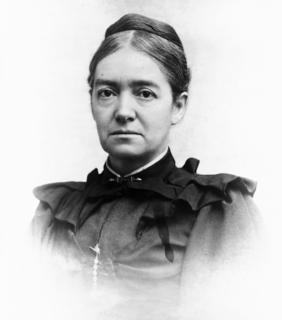
Portrait of Mary Putnam Jacobi, c. 1860–1865


Mary Putnam Jacobi is most well known for her work in advancing the medical understanding of women’s health, particularly the role of menstruation in women’s overall health. One of her most influential works was her 1876 essay, The Question of Rest for Women During Menstruation, which challenged the prevailing medical views regarding menstruation and physical activity. For this essay, she also received Harvard University’s Boylston Prize. This groundbreaking work was instrumental in redefining medical perspectives in women’s health because at that time many doctors (most of whom were male), believed that menstruation was a debilitating condition that required women to rest. Jacobi’s research and findings refuted this. She argued that menstruation, like other bodily functions, did not require special rest and that women should be encouraged to maintain normal physical activity during their menstrual cycle.

She was also a strong advocate for women’s rights, including the right for women to receive professional medical education. Through her work and writing, she not only played a pivotal role in changing the face of medicine by challenging outdated medical theories about women’s health, she also helped to advance the role of women in the medical profession . A strong advocate for the improvement of medical education for women, she helped to open doors so women could receive formal medical training. In fact, she played a very active role in promoting equal opportunities for women in the medical field.

Fantastic Women Series – Cecilia Payne Gaposchki

Mary was also an immensely respected scientist and her work in medicine and pathology was highly regarded by her peers. She was well known for her research on diseases, such as on the study of anaemia and its relation to menstruation. She published numerous and significant articles on various medical topics and was involved in medical societies, where her contributions were widely regarded as groundbreaking.

There is no doubt that her advocacy for women’s health, women’s rights in medicine, and her scientific research helped shift the landscape of medical practice and opened up new opportunities for women in the field.

Mary was also a prolific writer and educator, publishing articles in addition to serving as an active member of various medical societies. It can’t be said enough that she broke down barriers for women in medicine throughout her career, making her a pioneering figure in both the medical and women’s rights movements in the late 19th and early 20th centuries.

When she returned to New York City in 1871, after studying medicine in Paris for five years, she established her own private medical practice. At the same time, she participated in research and became a professor in the newly established Women’s Medical College of the New York Infirmary, as well as the Mount Sinai Hospital. Then she went on to become the second woman member of the Medical Society of the County of New York, and was admitted to the American Medical Association. Mary also helped to found the Women’s Medical Association of New York City in 1872 and served as its president from 1874 to 1903. Throughout this time, she consistently campaigned for women to be admitted to leading medical schools, such as Johns Hopkins School of Medicine. She was a founding member of the League for Political Education and the Women’s Medical Association of New York City, and was inducted into the National Women’s Hall of Fame in 1993.

Mary Putnam married New York physician, researcher, and father of American pediatrics Abraham Jacobi in 1873. They had three children, although only one child – a daughter – survived to adulthood.

Mary Putnam Jacobi passed away in 1906, leaving behind a prodigious legacy and she remains a significant figure in the history of women in medicine.

Become a Patron!

Saima Baig

I am a Chartered Environmentalist from the Royal Society for the Environment, UK and co-owner of DoLocal Digital Marketing Agency Ltd, with a Master of Environmental Management from Yale University, an MBA in Finance, and a Bachelor of Science in Physics and Mathematics. I am passionate about science, history and environment and love to create content on these topics.

Connect

Support Us On Patreon!

Digital Magazine 360 on History
Newsletter
Please enable JavaScript in your browser to complete this form.

Subscribe to our newsletter and stay updated..

Provide your email address to subscribe. For e.g abc@xyz.com
You may unsubscribe at any time using the link in our newsletter.

Subscribe to Podcast