Windmills as a source of power are all the rage today in the face of climate change. But these power houses are not a new invention.
The Netherlands is known for its iconic windmills with more than 1,200 historic windmills, many of which are fully operational. Particularly famous for their water management in low-lying areas, they have been a defining part of the Dutch landscape since the Middle Ages. The earliest mention of a windmill in the Netherlands dates back to 1221, and they have been crucial to Dutch history and culture.
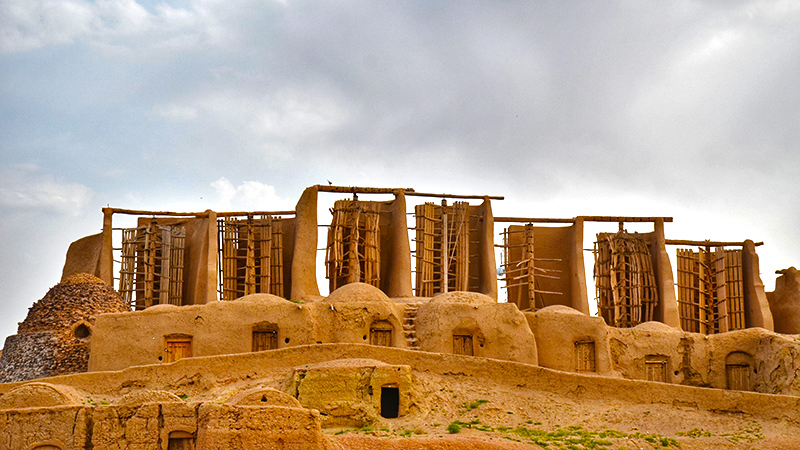
There are other parts of the world where we know windmills were also used. One of them is Nashtifan, in the Iranian desert in the northeastern part of the country, near Khaf in Khorasan Razavi Province. Here can be found windmills that are the oldest in the world, at over 1000 years old. This clearly tells us that windpower has been used for centuries to help us run labour-saving machines.
Why Nashtifan?
The region where Nashtifan is located experiences extremely high winds (called Shamal) and monsoon during the spring and summer months. The name Nashtifan itself means “storm’s sting”. These high winds reach up to 100 to 120 km (62 to 75 miles) per hour. The creative ancient Persians decided to harness these high winds by creating their own type of windmills called Asbad, which they used to produce specif flour products.
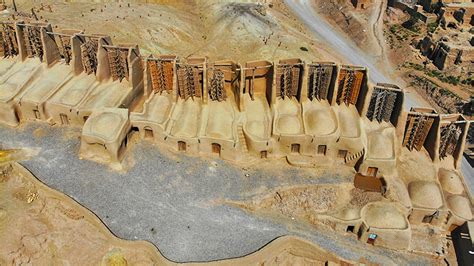
According to some sources, windmills have been constructed in Iran since 633 A.D. but windmills have been used to pump water as early as 5,000 years ago. The windmills in Nashtifan not only milled flour, they were (and are) also used to protect the town from the very strong winds that are common in the area. The people of ancient Persia protected themselves from a threat while also turning that very threat into a food producing opportunity. The windmills are built as part of an overall complex in a single area that can at times stretch to over 1km, and these large wall-like structures protect towns and villages from the sheering winds.
According to UNESCO: “Though this natural phenomenon is more prevalent all over the country during autumn, and in winter, winds may keep blowing, but the eastern parts of Iran are an exception in that even when there is no wind in other parts of Iran during spring and summer, these parts are affected by winds known as “120 days winds / black winds” the speed of which sometimes gets to 100 km / hour. The endless wind almost all the year along with the scarcity of water resources were two factors which encouraged our ancestors to make an efficient use of this natural energy, as a result of which windmills locally called “Asbad” were invented. Asbad is one of the most significant architectural structures of Iran in its desert regions which converts kinetic energy of air (wind) into other forms of energy.”
Read about the African Kingdom of Aksum
Construction
The Asbads are made of straw, natural clay, and wood, with each windmill comprising of eight chambers, and each chamber with six blades. It is the blades that act as grindstones when the wind enters the chambers. The mills are erected atop two parallel 65 feet high adobe walls and each has a windcatcher tower above and a lower room that houses spinning stone mills. The windcatcher at the top of the tower features a vertical opening facing north, allowing it to easily capture the prevailing wind. This wind is channelled down to the wooden vanes at the centre of the structure. As the handmade blades spin rapidly, they transfer energy to power the large grindstone located beneath the tower. There is a tank above the grindstones that pours out the wheat, the amount of which is controlled by the pressure and the speed of the wind. Essentially, the system is an automatic way to mill wheat, without any need for human intervention because energy is translated down the mast to the grindstones below, without the need for intermediary gears. The 40 side-by-side windmill structures can produce approximately 150 kg or 331 pounds of wheat, during the 120 days of wind.
Now, it is generally thought that windmill technology was spread through the world from Iran and the system was adapted for different uses across the globe. Nashtifan windmills, however, are markedly different from any others because the blades in this case are vertical. This makes the system very efficient, generating energy at the highest level.
Read about Pakistan’s Ancient Rock Art
History of Asbads
Historians believe that the first Asbad probably originated in Sistan, also in Iran, as an adaptation to lack of water and abundant, non-stop winds. According to science and technology historians Joseph Needham and Robert Forbes windmills originated in Iran as part of Islamic era culture.
Robert Forbes write: “this invention which was initially an exclusive device for Iran and Afghanistan, turned into an important source of energy all over the Islamic territories in 12th century and not only it was used for the grinding of grains and operation of water pumps, but also for the chopping of sugarcanes and other purposes“.
Subsequently, these vertial-axis windmills, also known as “Iranian Windmills” were imported into China by the Mongols. They were also taken to other Islamic territories. In Egypt, for example, they were used to chop and grind sugercane. Theys eventually reached Spain and Portugal, as well as the islands of the Aegean Sea in the 11th century A.D. (approximately 1105) but by now they had changed. The vertical-axis was replaced by the horizontal-axis with a 30 degree slope. And here we are today.
While the rest of the world has adopted the horizontal design, the people of Nashtifan still enjoy their vertical Asbads.
Sources: UNESCO // tasteiran // Video Courtesy Surfaces Reporter Magazine
Podcast: Play in new window | Download